Why WikiSolar
In renewable energy markets where billions of dollars are deployed based on data-driven decisions, the quality of your information source isn't just important—it's fundamental.
Incomplete databases lead to missed opportunities. Inaccurate data leads to failed investments. Duplicate records lead to flawed market analysis.
WikiSolar exists because the renewable energy industry deserves better. Since 2012, we've built the world's most comprehensive and reliable database of utility-scale solar projects—not by promising everything, but by delivering what professionals actually need: accurate, validated, actionable data.
What Sets WikiSolar Apart
Comprehensive Coverage That Goes Beyond Public Sources
Our database tracks over 50,000 utility-scale solar projects representing more than 1,000 GW of capacity across 180+ countries. But comprehensiveness isn't just about numbers—it's about access to information others can't obtain.
While other databases rely solely on published sources, WikiSolar maintains a proprietary network of solar developers who share project intelligence before it becomes public. This means our data includes:
- Projects in development before public announcements
- Operational details not disclosed in press releases
- Real-world timelines vs. promotional schedules
- Technical specifications verified at the source
The result: When you search WikiSolar, you find projects that don't exist in other databases—and the projects you do find have richer, more reliable data.
Unmatched Accuracy Through Multi-Layer Validation
Every data point in WikiSolar undergoes rigorous validation:
Satellite verification
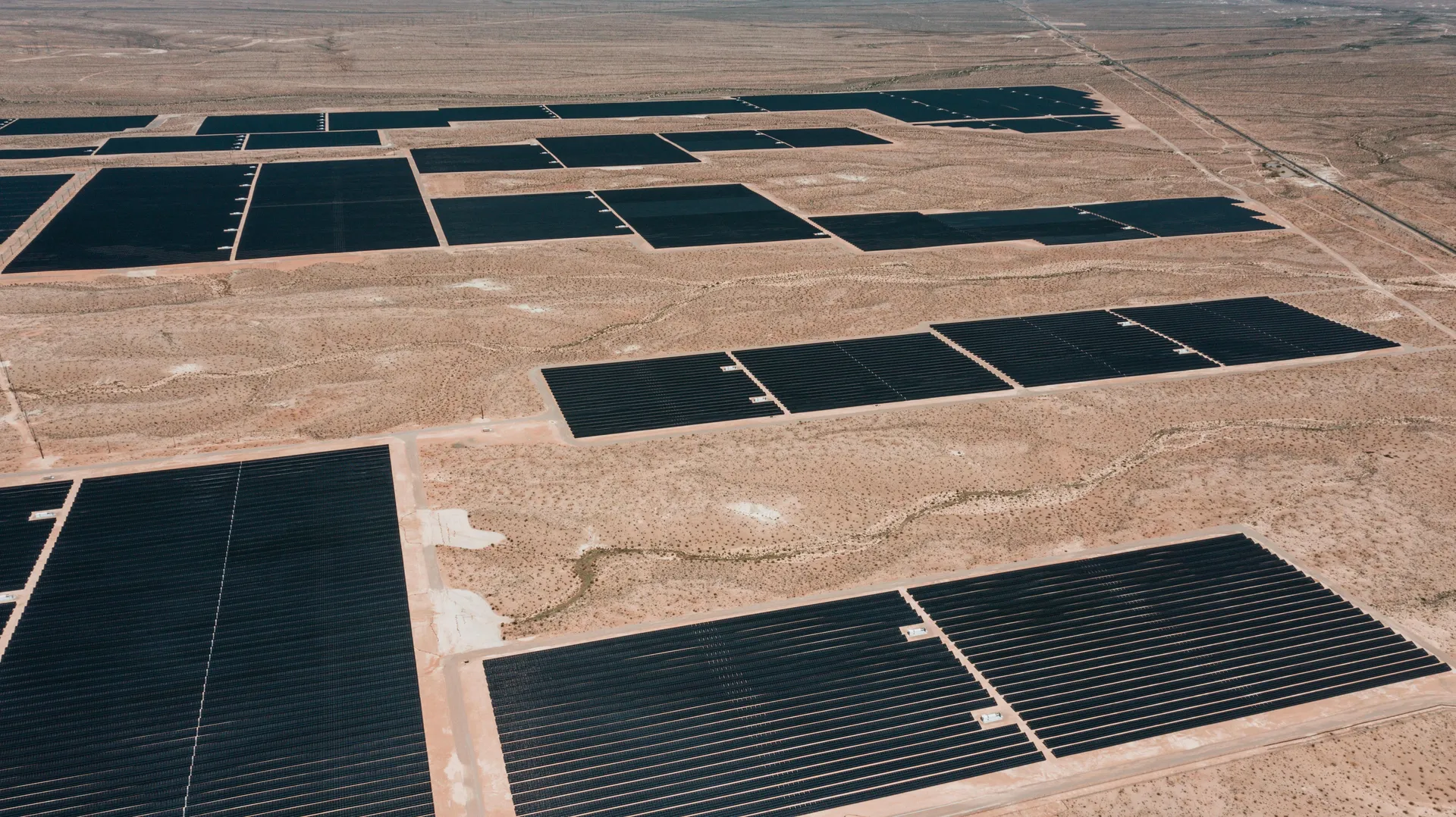
We use satellite imagery to validate plant locations, capacity, site area, and commissioning dates. Independent academic research found WikiSolar's satellite-validated data to be up to 34% more accurate than competing databases in identifying actual solar project footprints.
Duplicate elimination
While other databases often list the same project multiple times under different names or ownership structures, our mapping capabilities and AI-supported cross-referencing ensure each real-world plant appears exactly once.
Continuous quality control
Our team constantly updates records as new information emerges. When developers announce changes, when satellites show construction progress, when projects come online—we track it and verify it.
Vaporware filtering
Unlike databases that list every announced project regardless of viability, we include projects only after they've achieved tangible development milestones—planning approval, grid connectivity agreements, or financing closure. This means fewer ghost projects cluttering your analysis.
Historical Depth No Competitor Can Replicate
WikiSolar has tracked utility-scale solar since 2012—giving us fifteen years of historical data that cannot be reverse-engineered or purchased.
This historical depth enables:
- Trend analysis: How projects evolved from announcement to commissioning
- Developer track records: Which companies deliver on time vs. which overpromise
- Market evolution: How solar deployment patterns changed across regions and technologies
- Benchmarking: Compare current projects against historical performance
New entrants can build databases of operating plants. They cannot build fifteen years of project development history.
The Widest Range of Project Parameters
While basic databases track location and capacity, WikiSolar records comprehensive project intelligence:
Technical specifications
Module technology, inverter configurations, mounting systems, tracking capabilities
Operational data
Commissioning dates, capacity factors, performance characteristics
Commercial details
Developers, EPCs, owners, operators, off-takers, financing sources
Site characteristics
Land area, coordinates, terrain, co-location with storage
This breadth matters when your analysis requires more than "how many megawatts where."
Modern Platform, Professional Access
For over a decade, WikiSolar served clients through Excel exports and custom reports. Under new leadership, we're delivering the same trusted data through a modern web platform designed for professional use:
- Interactive map and filters for geographic and technical analysis
- Unlimited data exports without per-query restrictions
- Direct access without analyst gatekeeping
- Transparent pricing at a fraction of enterprise analyst firm costs
We're bringing the accessibility and user experience of modern SaaS to renewable energy data—without compromising the quality that built our reputation.
Proven Track Record
WikiSolar serves the organizations making the largest decisions in renewable energy:
- Investment banks and asset managers conducting due diligence on multi-billion dollar portfolios
- Research institutions publishing authoritative market analysis
- Energy consultancies advising governments and corporations on renewable strategy
- Solar developers benchmarking their projects against global competition
- Academic institutions conducting peer-reviewed research on solar deployment
When accuracy matters—when real money is at stake—professionals choose WikiSolar.
Independent Validation
We don't just claim to be the best. Independent research confirms it:
Comparative analysis
When our data has been compared against other major databases, WikiSolar consistently shows 10-30% more actual solar plants after eliminating duplicates and vaporware from competitor datasets.
Academic validation
University researchers using WikiSolar data for peer-reviewed publications have validated our methodology and accuracy, with our satellite-verified site areas proving up to 34% more precise than alternative sources.
Industry recognition
Our founder, Philip Wolfe, authored the first major book on utility-scale solar power (Routledge, 2012) and established WikiSolar as the definitive reference the industry lacked.
The WikiSolar Difference, Simply Put
Other databases
- Rely on public sources only
- Include unverified announced projects
- Contain duplicate entries
- Offer limited technical parameters
- Started recently, lack historical depth
WikiSolar
- Combines public sources with proprietary developer network
- Filters vaporware, validates with satellite imagery
- Eliminates duplicates through advanced cross-referencing
- Tracks comprehensive project parameters
- Fifteen years of historical data across all major markets
See For Yourself
We're confident enough in our data quality to offer full platform access during your 7-day trial. No credit card required. No sales pressure.
See how WikiSolar's comprehensive coverage, validated accuracy, and professional tools compare to whatever you're using now.